If your jaboticaba leaves are turning brown, check the root zone before reaching for fertiliser or fungicide. When browning begins at the leaf tips, a period of dry soil is the clearest species-specific cause to investigate first. Jaboticaba has shallow feeder roots and performs best with consistent moisture, so even a short dry spell can scorch its foliage.
Dry soil is not the only possibility, however. Fertiliser salts, alkaline soil, sudden exposure to strong sun, cold damage and rust-like leaf spots can produce similar symptoms. The pattern of damage—and what changed just before it appeared—will usually point you towards the right fix.
Quick diagnosis: what do the brown leaves look like?
| What you see | Likely match | First thing to check |
|---|---|---|
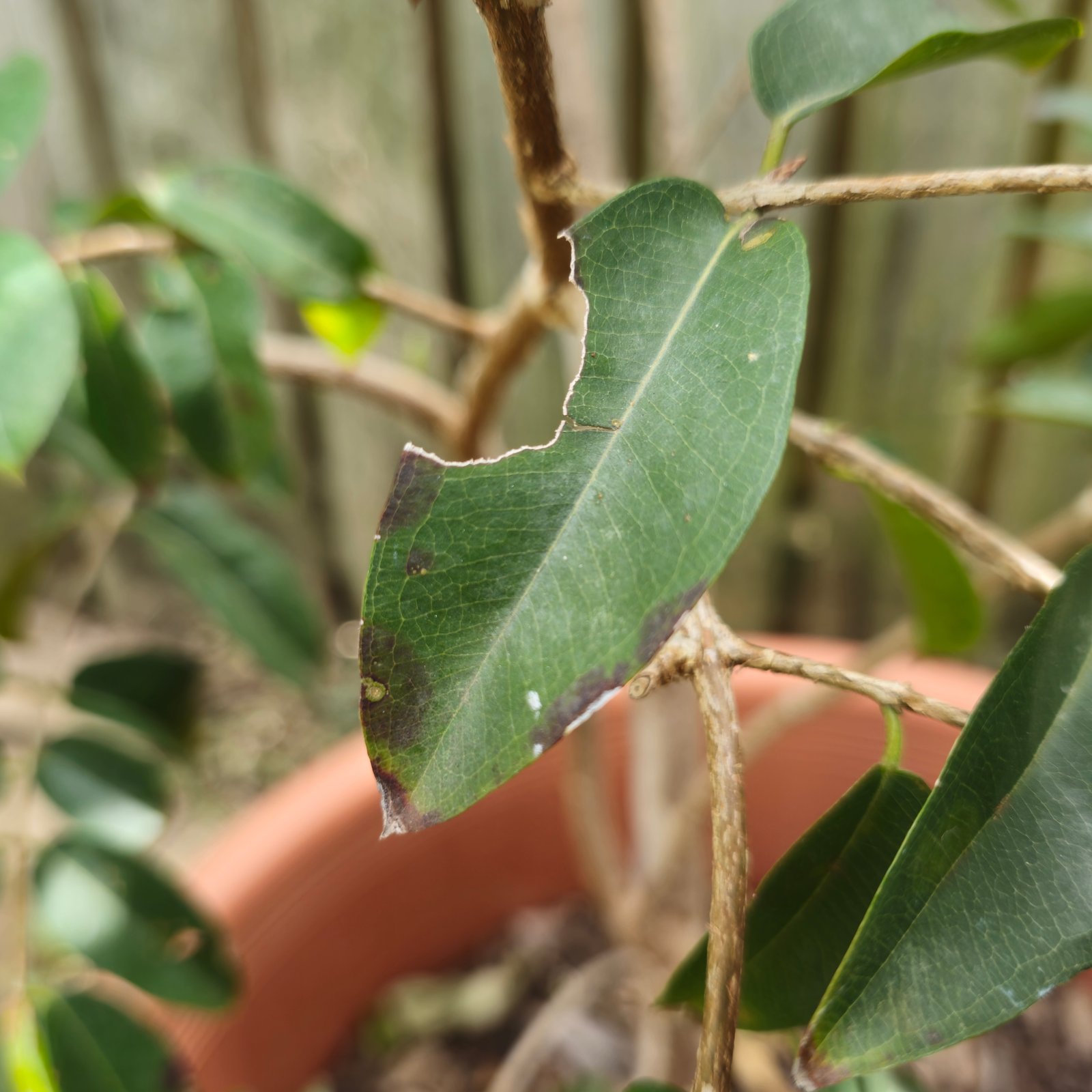
| Crisp brown tips spreading inwards | Drought or inconsistent watering | Has the root zone dried recently? |
| Brown tips and margins soon after feeding | Fertiliser or soluble-salt burn | Recent fertilising, white crust or salty irrigation water |
| Young leaves yellow between green veins, later browning | High pH and poor iron availability | Soil or potting-mix pH |
| Pale, bleached or tan patches on the exposed side | Sun and heat scorch | A recent move from shade into direct sun |
| Dark, limp or blackened foliage after a cold night | Cold or frost injury | Recent minimum temperature and exposure |
| Separate rusty or brown spots during wet weather | Rust or another leaf-spot problem | Spot shape, spread and duration of leaf wetness |
These clues are a starting point, not a laboratory diagnosis. More than one stress can occur at once—for example, dry potting mix can make fertiliser burn worse during hot weather.
1. The soil or potting mix dried out
This is the first cause to investigate. The University of Florida’s jaboticaba growing guide says the trees perform best in consistently moist soil, tolerate drought poorly and can develop browning that begins at the leaf tips after only a short dry period. Container-grown trees are particularly vulnerable because their shallow feeder roots occupy the upper part of the pot, which dries first.
Signs that dryness is responsible
- Browning begins at the tips and gradually moves towards the base of the leaf.
- The affected tissue feels dry or crisp rather than soft.
- The pot feels unusually light, the mix has pulled away from the pot edge, or the soil beneath the mulch is dry.
- The damage followed hot weather, drying wind, missed watering or a change in irrigation.
- A recently planted or young tree is affected more severely than an established tree.
What to do
Water the root zone slowly and thoroughly. For a container tree, keep applying water until it drains freely from the holes; if very dry mix initially repels water, apply it in several slow passes. Do not leave the pot standing in stagnant water.
After rehydrating it, aim for even moisture rather than a cycle of bone-dry and saturated soil. Check with a finger or wooden probe instead of watering to a fixed calendar. A layer of organic mulch can slow moisture loss in the ground, but keep mulch a short distance away from the trunk.
In South-East Queensland, pay extra attention to pots during hot or windy spells and during dry winter periods when irrigation may have been reduced. Gardeners elsewhere should make the same check whenever heat, low humidity or wind increases water loss.
2. Fertiliser or soluble salts have burned the roots
More fertiliser is not the safe response to every brown leaf. Jaboticaba can be sensitive to salt buildup and is prone to nitrogen burn. UF/IFAS favours organic fertilisers to reduce this risk and notes that there is no formal, species-specific IFAS fertiliser rate—so product labels and conservative application matter.
The University of Maryland Extension explains why the symptom resembles drought: soluble salts can draw moisture from root tissue, leading to wilting, marginal yellowing and brown leaf edges. Hot, dry conditions concentrate those salts and can make the injury worse.
Signs that salt or fertiliser burn is responsible
- Browning appeared after a heavy feed, repeated liquid feeding or an accidental double dose.
- Damage is concentrated along tips and margins across many leaves.
- A pale or white crust has formed on the potting mix or pot rim.
- The tree is in a container that is watered lightly but rarely flushed through.
- Roots and foliage were already dry when fertiliser was applied.
What to do
Pause fertilising while the plant is stressed. If a container drains freely, run clean water slowly through the mix to carry excess soluble salts out of the drainage holes. Never flush a pot with blocked drainage, and do not allow the drained solution to sit beneath it.
Resume feeding only when healthy new growth appears, using a suitable product at the label rate. Avoid improvised treatments such as Epsom salts unless a soil or tissue test identifies a genuine need; adding another salt can compound the problem.
3. The root zone is too alkaline
Jaboticaba prefers acidic soil—approximately pH 5 to 6, according to UF/IFAS. When the root zone is too alkaline, iron and other micronutrients can become less available even when they are present. The classic early clue is interveinal chlorosis: newer leaves turn pale or yellow while their veins remain greener. Severe or prolonged stress may eventually lead to brown, dead tissue.
This pattern is different from simple drought scorch. If leaves are uniformly crispy at the tips but were never yellow between the veins, start with moisture and salts before assuming iron deficiency.
What to do
Test the soil or potting mix before trying to alter it. If the pH is high, choose a controlled correction appropriate to your soil, water and growing method. UF/IFAS notes that acidic organic materials and carefully managed elemental sulphur can lower alkaline soil gradually, while chelated iron may be used for interveinal chlorosis.
Do not add sulphur, iron or acidifying products blindly. The correct product and rate depend on the existing pH, soil texture, container volume and product formulation. Follow the label and, for an in-ground tree, use a reputable soil laboratory or local horticultural service when possible.
4. Sudden sun, heat or drying wind scorched the foliage
An established jaboticaba can tolerate full sun, but the species generally prefers partial shade. A young tree, a recently purchased plant or one moved abruptly from a shade house can scorch before its leaves adapt.
University of Maryland Extension guidance on environmental leaf injury describes sunburn as pale, spotted or scorched tissue after direct light reaches foliage that has not been hardened off. Wind and drought intensify water loss, so sun scorch and dry-root damage often overlap.
Signs that exposure is responsible
- Damage is worse on the western, upper or otherwise exposed side of the canopy.
- Leaves have bleached, tan or irregular patches rather than only neat brown tips.
- The problem began after moving the tree, removing nearby shade or experiencing an unusually hot, windy period.
- Sheltered inner leaves remain greener.
What to do
Move a container tree to bright, protected light with gentler morning sun and afternoon shade while it recovers. Acclimatise it to stronger sun gradually rather than shifting it back into all-day exposure at once. For an in-ground young tree, temporary shade cloth and wind protection may help during extreme conditions, provided air can still circulate.
Keep the root zone evenly moist, but do not try to compensate for heat by leaving a pot submerged in water.
5. Cold or frost damaged tender growth
Jaboticaba is subtropical to tropical and its cold tolerance varies by species and cultivar. UF/IFAS reports that prolonged exposure below about −2°C (28.4°F) can cause damage, while some selections are more sensitive than others.
Signs that cold is responsible
- Injury appeared soon after a frost or unusually cold night.
- Tender tips and exposed outer leaves were hit first.
- Leaves look water-soaked, dark brown or black before drying.
- Foliage beside a wall or beneath overhead cover is less affected.
What to do
Protect small plants before the next cold event by moving pots to a sheltered position or using frost cloth. Avoid fertilising to force tender growth while cold conditions continue. Wait until the weather improves and new growth reveals which twigs are alive before doing major pruning; partially green leaves can still photosynthesise.
For growers in South-East Queensland, this is more likely in inland, elevated or low-lying frost pockets than in warm coastal positions. Worldwide readers should judge risk by their own microclimate rather than by a broad regional label.
6. The marks are rust or leaf spots—not simple tip burn
If the damage consists of separate rust-coloured or brown spots, especially after prolonged rain, you may be looking at a leaf-spot problem rather than water stress. UF/IFAS notes that jaboticaba leaves and fruit can develop cosmetic rust spots during heavy rainfall or extended wet periods. Insect pests such as scale, mealybugs, aphids and whiteflies are reported as uncommon unless the tree is stressed or overfertilised, but it is still worth checking both sides of the leaves and the stems.
Signs that spotting is responsible
- Marks begin as distinct circles, specks or lesions instead of progressing evenly from the tip.
- New spots continue to appear during wet, humid weather.
- Leaves remain wet for long periods or the canopy has poor airflow.
- You can see insects, sticky honeydew, sooty mould or raised bumps on the stems.
What to do
Improve airflow, avoid repeatedly wetting the foliage when irrigating and clear fallen affected leaves from beneath the plant. Do not apply a fungicide solely because a leaf is brown: drought, salts and spray injury can all mimic disease.
If spots are spreading rapidly, twigs are dying or the diagnosis is uncertain, take clear close-up and whole-plant photographs and seek help from a local plant diagnostic service. Any pesticide or fungicide must be registered for the plant and problem in your location and used exactly as its label directs.
A safe five-step recovery plan
When the cause is not obvious, use this low-risk order:
- Review the previous two weeks. Note missed watering, heat, wind, cold, fertilising, spraying, repotting or a change in sun exposure.
- Inspect the pattern. Tips suggest water or salts; yellow tissue between green veins suggests a pH-related nutrient problem; one-sided patches suggest exposure; separate spots suggest leaf disease.
- Check the root zone. Confirm that it is moist but aerated and that container drainage holes are open. Do not diagnose from the surface alone.
- Stop adding inputs. Until you identify the cause, pause fertiliser, Epsom salts, tonics and preventative sprays. Stabilising moisture and shelter is safer than stacking treatments.
- Watch the next growth. Existing brown tissue will not turn green again. Recovery is shown by the browning stopping and the next flush emerging healthy.
Seek local diagnostic help if the trunk base is soft or discoloured, roots smell rotten, entire branches die, the canopy declines despite stable moisture, or pests or spots spread quickly.
Frequently asked questions
Should I cut off brown jaboticaba leaves?
Remove leaves that are completely dead or clearly diseased, but keep leaves that retain substantial green tissue. They can still support the tree while it recovers. Use clean tools and avoid heavy pruning on a stressed plant.
Can a jaboticaba recover after its leaves turn brown?
Often, yes—provided the roots, trunk and branches are still alive and the cause is corrected. After drought, UF/IFAS notes that a tree with healthy bark has better odds of survival. Judge recovery by stable branches and healthy new growth, not by the old brown areas becoming green again.
How often should I water a jaboticaba?
There is no reliable universal schedule. Pot size, soil, wind, temperature, season and tree size all change water use. Check the root zone frequently and water deeply enough to keep it consistently moist without leaving a container in stagnant water. Young and potted trees usually need closer monitoring than established in-ground trees.
Does jaboticaba prefer full sun or shade?
UF/IFAS describes partial shade as preferred, although established trees can tolerate full sun. Young or shade-grown trees should be acclimatised gradually, particularly in hot climates.
Should I fertilise a jaboticaba with brown leaves?
Not until you know why the leaves are brown. If the cause is salt or nitrogen burn, more fertiliser will worsen the stress. Correct moisture and exposure first, test pH if chlorosis is present, and resume feeding conservatively only after the tree stabilises.
The bottom line
When jaboticaba leaves turn brown from the tips inward, recent dryness is the best first suspect because this exact progression is documented in species-specific guidance. Restore consistent moisture, then check for fertiliser salts, high pH, sudden sun or wind, cold injury and spot-like disease symptoms. Avoid treating every brown leaf with extra fertiliser or fungicide—the pattern and recent care history are far more useful than the colour alone.
If the foliage looks healthy but the tree has never bloomed, use this guide to why a jaboticaba is not fruiting. http://averysacres.com.au/jaboticaba-not-fruiting
Sources and further reading
- Das, A. and Chen, J. Jaboticaba: A Unique Fruit Tree for Florida Home Gardeners, University of Florida IFAS Extension. Species-specific guidance on soil pH, roots, irrigation, drought browning, fertilisation, climate, pests and rust spotting.
- University of Maryland Extension. Fertilizer or Pesticide Burn on Vegetable Leaves. Explanation of soluble-salt injury and marginal leaf scorch.
- University of Maryland Extension. Vegetable Seedlings or Transplant Leaves Yellowing, Turning White, or Are Spotted or Scorched. Diagnostic guidance for sunburn and environmental injury.